

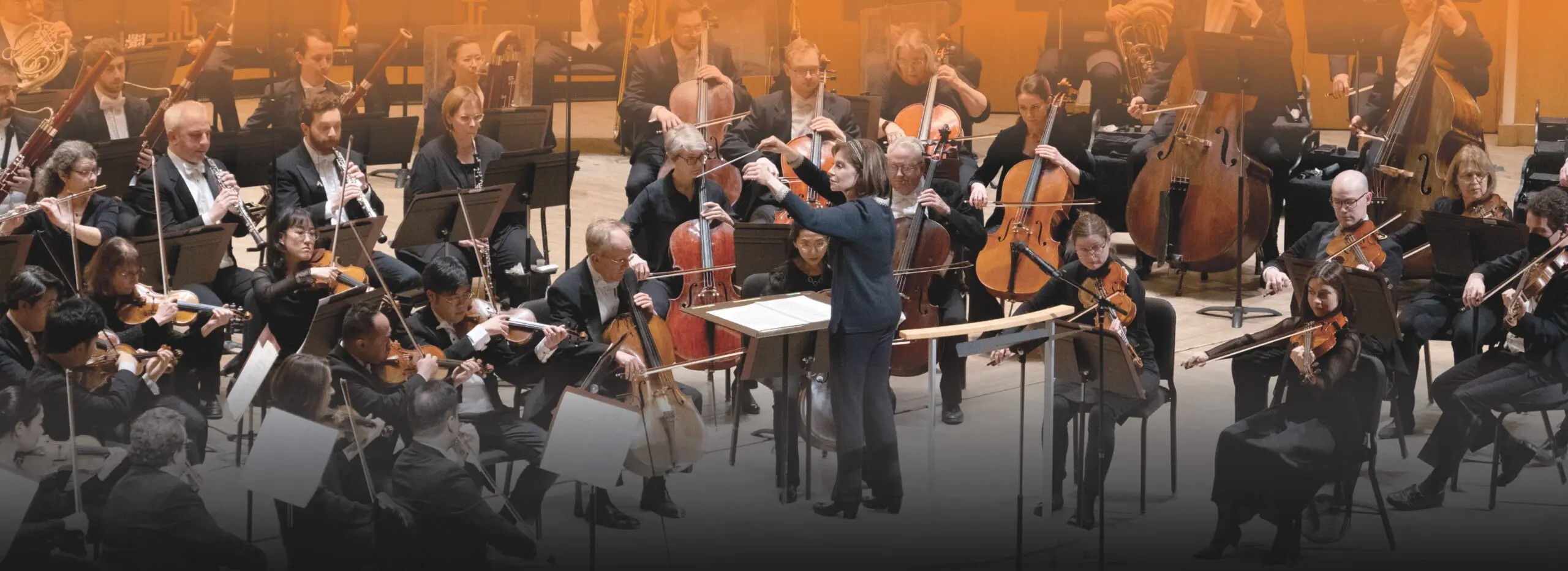
Please join us for three exclusive Donor and Subscriber Open Rehearsals!
To thank you for your generous support, we invite you to join us for three Donor and Subscriber Open Rehearsals this season. Watch as our musicians prepare for their upcoming performance, offering a rare glimpse into the rehearsal process. It’s a unique opportunity to see the dedication and artistry that goes into every concert. Learn more and RSVP below!
For questions, please contact Carson Mannino at cmannino@bpo.org.
Mozart’s Mass
Thursday, January 15
7:30pm
Maximiano Valdes, conductor
Natalia Sandaliz, soprano
Carmen Isabel, soprano
John Tiranno, tenor
Lester Lynch, baritone
Buffalo Philharmonic Chorus
Our Mozart Festival opens with the “Prague” Symphony No. 38, composed on the heels of The Marriage of Figaro‘s tremendous success. Rich in complex subtleties and lyrical sophistication, it spans a full spectrum of emotion. Mozart’s unfinished “Great” Mass in C minor—his most exalted and personal work—was deeply influenced by the Baroque traditions of Bach and Handel. Its original movements journey from somber to soaring, with later 20th-century revisions completing the piece.
Dancing & Romancing
Saturday, February 28
1:00pm
Ron Spigelman, conductor
Joan Hess, vocals
Kirby Ward, vocals
Broadway and Hollywood combine for a romantic and entertaining evening of song and dance inspired by the likes of Fred Astaire, Ginger Rogers, Gene Kelly, and Eleanor Powell. With hit tunes like They Can’t Take That Away from Me and Let’s Face the Music and Dance to Singin’ in the Rain and Begin the Beguine, this evening will put a smile on your face and a spring in your step.
Pablo’s Guitar
Saturday, April 11
10:00am
Anna Sułkowska-Migoń, conductor
Pablo Sáinz Villegas, guitar
Bacewicz’s six-minute Overture for Orchestra, composed during the German occupation of Poland, offers a perpetually shifting palette of colors. Spaniard Joaquin Rodrigo’s animated Concierto de Aranjuez features elaborate orchestration for classical guitar, while Fauré’s tragic Pelléas et Mélisande Suite was originally composed as incidental music for a dramatic play. Borodin’s colorful Symphony No. 2 evokes the exuberance of Russian folk dances.